
HomeFranchise Funding by IndustrySenior Care
Senior Care Franchises

How to Fund a Senior Care Franchise

What a senior care franchise really costs, from the franchisors' own disclosure documents, and how to fund a business where payroll comes before payment.

$94K–$217K

Published startup range

4 of 4

Brands on the SBA directory

$100K–$150K

Liquid capital asked

Al Lesko, founder of Fund My Franchise

Al Lesko

Fund My Franchise

Updated

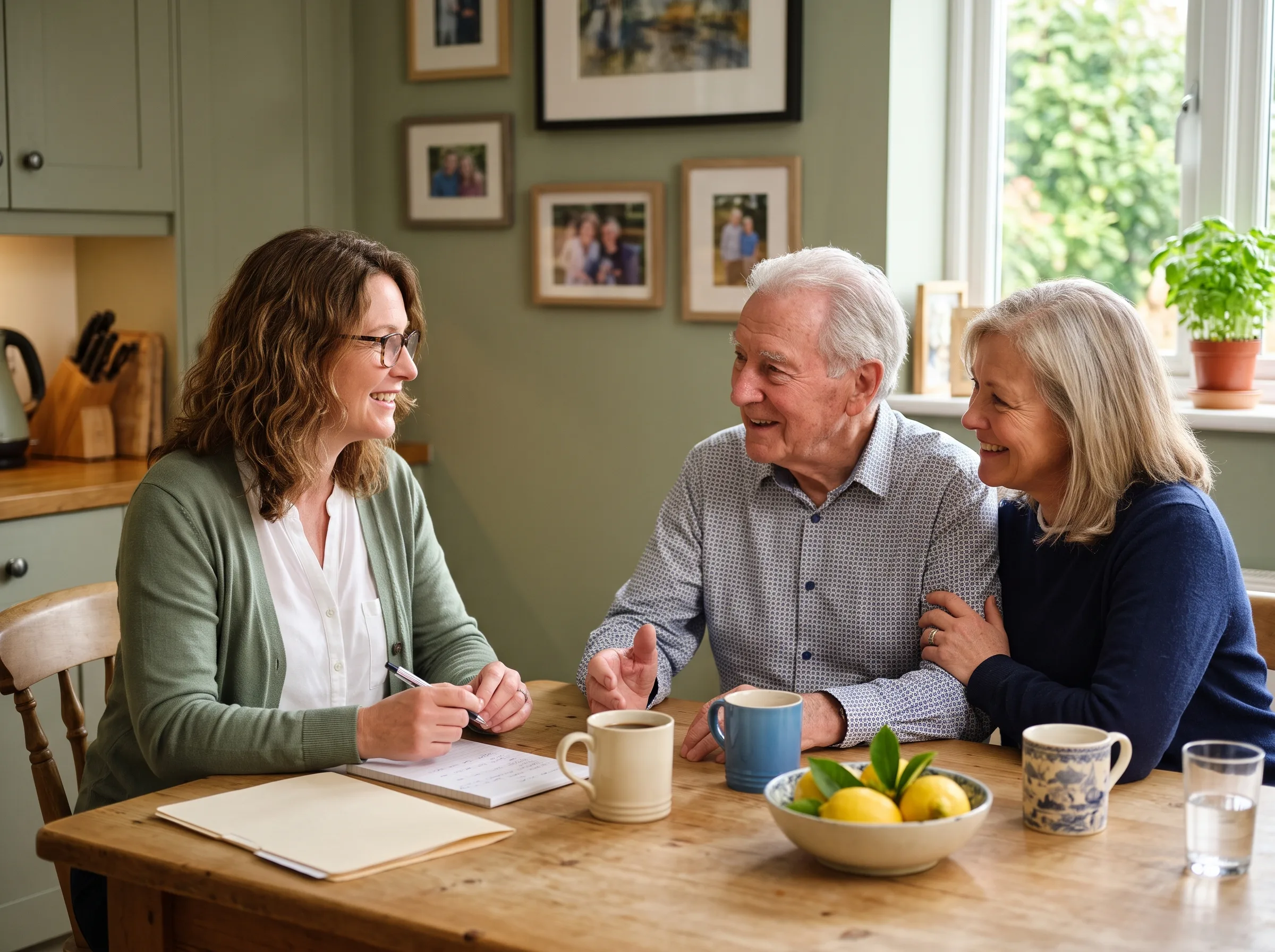
Senior care franchise owner meeting with an older man and his daughter at their kitchen table to plan his care

The short answer

A senior care franchise costs roughly $94,000 to $217,000 to open, based on the published Item 7 estimates of four national brands, and a big share of that is working capital for caregiver payroll. Most buyers fund one with an SBA 7(a) loan or a 401(k) rollover, and add a credit line so payroll never depends on when clients pay.

How much does a senior care franchise cost?

Every franchisor publishes an estimated initial investment in Item 7 of its Franchise Disclosure Document (FDD). Here is what four of the largest home care franchises list today.

BrandTotal investmentFranchise feeAdditional fundsLiquid capital
Right at Home$94,330 – $176,239$49,500$17,000 – $40,000 (3 months)$150,000
Home Instead$98,000 – $125,000$54,000$30,000 – $40,000 (6 months)Not published
Comfort Keepers$119,560 – $190,700$55,000$39,000 – $52,000 (3 months)$100,000
BrightStar Care$126,464 – $217,486$50,000$53,829 – $83,956 (3 months)$150,000

Figures from each franchisor's investment page, checked November 24, 2026. FDDs are reissued every year; get the current FDD from the franchisor before you budget.

The spread is mostly about the care model and how much runway each franchisor builds in. BrightStar Care includes medical staffing, with lines for a Director of Nursing and Joint Commission accreditation, and the largest additional-funds estimate. Home Instead budgets six months of expenses rather than three. Comfort Keepers also recommends about $100,000 of working capital or a credit line on top of its Item 7 total.

Where does the money go?

A senior care franchise is a people business run from a small office. There is little equipment to pledge as collateral, so lenders lean on your credit, cash and experience, and the largest costs are the ones that keep caregivers paid while the client list grows.

  • Franchise fee

    About $50,000 to $55,000 across the brands above. Comfort Keepers offers veterans 20% off its fee.

  • Additional funds

    The biggest variable. BrightStar lists $53,829 to $83,956 for three months; Home Instead $30,000 to $40,000 for six.

  • Licensing and accreditation

    Many states license home care agencies. Comfort Keepers budgets $0 to $10,000 for licensure; BrightStar up to $10,000 plus optional Joint Commission accreditation.

  • Insurance

    Liability and workers' comp for caregivers. Right at Home lists $7,000 to $12,000; Comfort Keepers $3,100 to $6,800.

  • Office and equipment

    A small office, furniture and scheduling software. Usually $10,000 to $25,000 combined, far below a retail build-out.

  • Caregiver recruiting and training

    Hiring and background checks before the first client. Comfort Keepers lists $2,000 to $3,500 for caregiver training.

How to finance a senior care franchise

Four funding paths cover nearly every senior care franchise deal. Many buyers combine two of them.

SBA 7(a) loan

Best fit for most buyers

All four brands above appear on the SBA Franchise Directory. A senior care office has little equipment to pledge, so the loan leans on your credit, cash injection and personal guarantee. Expect to bring 10% to 30% of the project in cash, and ask the lender to include working capital in the loan. How SBA franchise loans work.

401(k) / IRA rollover (ROBS)

Debt-free start or the cash injection

Rolls retirement savings into the business without early-withdrawal penalties. It can fund a lower-cost senior care franchise outright or cover the cash injection for an SBA loan. It comes with ongoing compliance. How a ROBS rollover works.

Unsecured credit lines

Payroll cushion and growth

Revolving business credit with no collateral. Useful as a backstop for payroll while client payments catch up, at higher rates than an SBA loan. How unsecured credit lines work.

Personal loan

Lower-cost brands

Up to $150K for the most qualified borrowers, with no collateral or down payment. Paired with savings, it can cover the low end of the range above. How personal loans work.

Three ways buyers put it together

These are illustrative examples, not quotes or actual client deals. Your mix depends on your credit, savings, retirement balance and the brand you choose.

SBA-led

$200,000 project

SBA 7(a) loan
$160,000
Cash injection (20%)
$40,000
Personal reserves kept aside
Separate

Fits a buyer with strong credit and savings who wants to keep retirement accounts intact.

ROBS-led

$150,000 project

401(k) rollover (ROBS)
$120,000
Unsecured credit line
$30,000
Monthly loan payment
None

Fits a buyer with a larger retirement balance who wants no loan payment while the client base grows.

Lean start

$110,000 project

Personal loan
$70,000
Unsecured credit line
$20,000
Savings
$20,000

Fits a lower-cost brand and a buyer with excellent credit and verifiable income.

Payroll comes before payment

Caregivers are paid every week or two. Private-pay families, long-term care insurers and government programs can take weeks to pay you. Every new client widens that gap, so a growing agency can run short of cash while it is profitable on paper. That is why the franchisors budget $17,000 to $84,000 of additional funds, and why Comfort Keepers recommends about $100,000 more in working capital or a credit line.

Lenders look at whether you can cover the loan payment and payroll while receivables catch up. Build working capital into the loan, keep a credit line as a backstop, and keep personal reserves outside the business. Our guides on working capital and cash runway and debt service coverage walk through the math.

What lenders look for in a senior care franchise buyer

  • Credit. Al's practical target for SBA franchise financing is 720+. Lower scores narrow the options.

  • Cash. A 10% to 30% injection for an SBA loan, plus reserves after closing. Right at Home and BrightStar ask for $150,000 liquid, Comfort Keepers $100,000.

  • Experience. Management, hiring and community sales experience carry weight, because the owner recruits caregivers and builds referral sources. Check each franchisor's own background requirements.

  • A brand on the SBA directory. All four brands above are listed, which speeds up lender review.

Not sure where you stand? The Am I Fundable? quiz takes about a minute, and the SBA loan calculator shows what a payment would look like.

Senior care franchise funding FAQ

How much does a senior care franchise cost?

Across Right at Home, Home Instead, Comfort Keepers and BrightStar Care, the published Item 7 initial investment runs from $94,330 at the low end to $217,486 at the high end, as of November 2026. A large share of that is additional funds to cover payroll and expenses for the first three to six months.

Can I get an SBA loan for a senior care franchise?

Yes. BrightStar Care, Comfort Keepers, Home Instead and Right at Home are all listed on the SBA Franchise Directory as of November 2026. Approval still depends on your credit, cash injection and experience. Al Lesko's practical target for SBA franchise financing is a 720+ credit score.

How much liquid capital do I need for a senior care franchise?

Right at Home and BrightStar Care publish a $150,000 liquid capital minimum, and Comfort Keepers $100,000. Comfort Keepers also recommends about $100,000 of additional working capital or a line of credit beyond its Item 7 estimate.

Why do senior care franchises need so much working capital?

Caregivers are paid every week or two, while private-pay clients, long-term care insurers and government programs can take weeks to pay. That gap grows as you add clients, so a fast-growing agency can be short on cash even when it is profitable.

Can I use my 401(k) to buy a senior care franchise?

Yes, through a Rollover as Business Startup (ROBS). It can fund a lower-cost senior care franchise outright or cover the cash injection for an SBA loan. The trade-off is that retirement savings are at risk in the business and the plan needs ongoing administration.

Sources

Investment figures: Right at Home · Home Instead · Comfort Keepers · BrightStar Care. SBA listing: SBA Franchise Directory (November 17, 2026 edition; listing is not an SBA endorsement).

Looking at a senior care franchise?
Know your funding before you sign.

Al reviews your credit, savings and retirement accounts, then lays out which funding paths fit the brand you're considering.

Soft credit pull only
No obligation